Who repairs air conditioners in Vancouver, WA
Alex, the owner of 777 HVAC, diagnoses and repairs central air conditioners, heat pumps and ductless systems for homes in Vancouver and nearby Clark County. Visits run Monday to Friday, 7am to 5pm; 777 HVAC does not run an after-hours emergency service. In a heat wave, call early: you get the earliest opening, or a straight answer if it is not soon enough.
Check these before you call
- The thermostat is set to Cool, and set below the room temperature.
- The filter isn’t clogged.
- The breaker for the outdoor unit hasn’t tripped.
- If there is ice on the lines or the indoor coil, switch cooling off and let it thaw. Running it frozen can damage the compressor.
Common AC problems and their usual causes
- Warm or barely cool air. A dirty filter or coil, low refrigerant from a leak, a failed capacitor or contactor, or a compressor problem.
- Outdoor unit silent or humming. A failed capacitor or contactor, a tripped breaker, or a thermostat wiring fault.
- Ice on the refrigerant lines or indoor coil. Low airflow or low refrigerant.
- Water around the indoor unit. A clogged condensate drain or pan, or a coil that froze and is thawing.
- Short cycling. An oversized system, thermostat placement, refrigerant or electrical faults.
- Cool but sticky. An oversized system or airflow set too high, so it doesn’t run long enough to pull out humidity.
Check the system as a whole
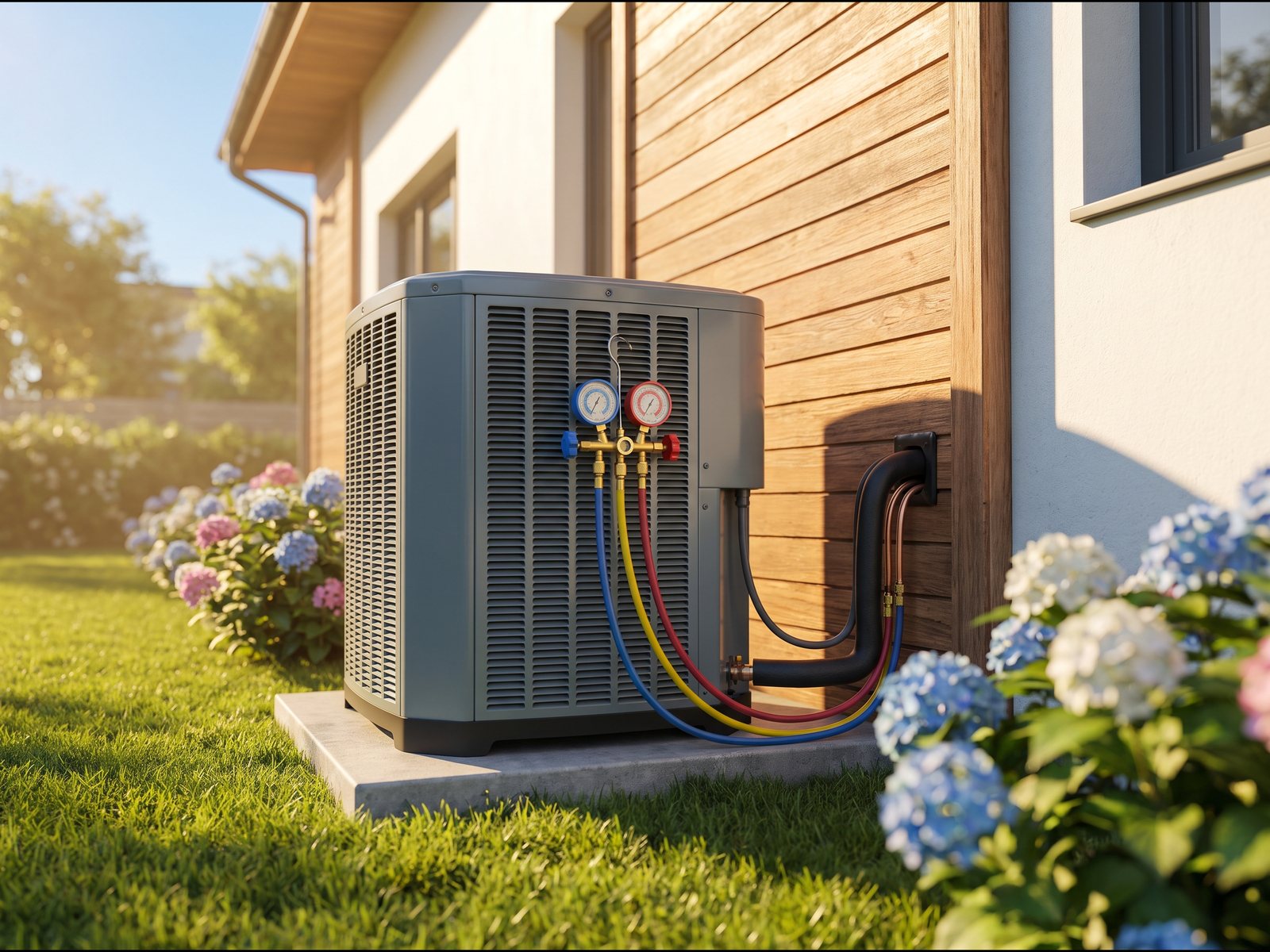
Depending on the symptoms, service may include thermostat operation, filter and blower airflow, indoor and outdoor coils, condensate drainage, electrical components and refrigerant performance. Measurements are read together rather than leaning on a single temperature reading.
Refrigerant is not a routine consumable in a sealed system. If the charge is low, the leak and its repair get discussed before anyone recharges it. You get the repair price in writing before any work starts.
What a repair visit costs
Repair visits carry a diagnostic charge that covers the trip and the time it takes to find the fault properly. You are told the amount when you book, never after. The FAQ explains how pricing works.
Repair or replace?
Compare the repair cost with the equipment’s condition, its repair history and the parts available. If replacement is worth pricing, the estimate is free, and it is a good moment to compare a heat pump, which cools the same way and also heats.
Older systems that run on R-22 refrigerant are a special case. New R-22 is no longer made or imported, and after 2020 only recycled, reclaimed or previously produced R-22 can be used for service (EPA). Nothing requires you to replace an R-22 system, but a refrigerant leak on one is a good moment to price both options.
Common questions
Why is the AC running without cooling well?
Airflow restrictions, dirty coils, refrigerant leaks and electrical faults can all look the same from inside the house. A diagnosis separates them and points to the right repair.
Does low refrigerant always mean a leak?
A correctly charged sealed system should keep its refrigerant. A low charge calls for finding the leak or an earlier charging mistake, not a routine top-up.
Is there a charge to diagnose an air conditioner?
Yes. Repair visits have a diagnostic charge, quoted when you book.
Should I replace an older air conditioner?
Compare the repair cost, overall condition, reliability, parts availability and your plans for the house. Age is useful context, but not the only reason to replace a system.