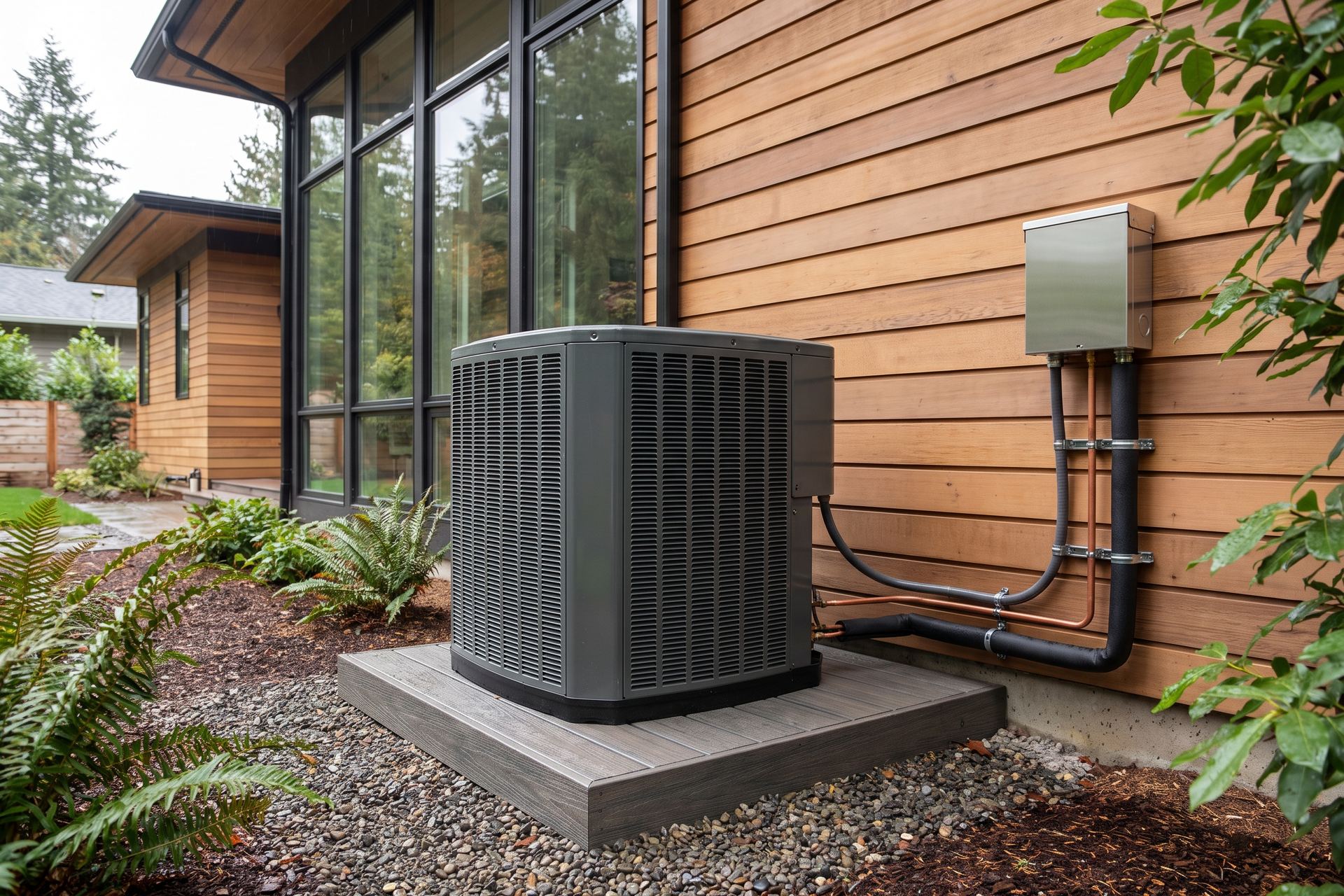
Who installs heat pumps in Vancouver, WA
777 HVAC installs ducted heat pumps and ductless mini-split heat pumps for homes in Vancouver and nearby Clark County, and can pair a heat pump with a gas furnace for backup heat. Alex, the owner, runs the load calculation, writes the quote and installs the system. Estimates on replacements and new installs are free.
Choose the right system arrangement
A ducted heat pump can heat and cool through suitable existing ducts. A ductless system may be a better fit for an addition or a home without ductwork. Some homes do best keeping a compatible furnace as backup heat.
The right arrangement depends on the building, the space available, the existing utilities and your comfort goals. You get the options explained for your house, not the same setup for every project. The system guide compares heat pumps, furnaces and ductless by how the house is heated today.
Sized with a load calculation
A heat pump that is too big short-cycles and dehumidifies poorly in summer; one that is too small leans on backup heat in a cold snap. Clark County’s building department notes that sizing by square footage is not allowed under the Washington State Energy Code, and that cooling equipment sized without the required calculation is often 143% to 322% oversized (Clark County HVAC System Guidelines).
777 HVAC runs a load calculation first, then checks duct condition and airflow, the outdoor-unit location, indoor access and the thermostat controls, because all of them affect how the system performs day to day.
Heat pumps in a Clark County winter
A heat pump pulls heat out of outdoor air. Clark Public Utilities explains that on many systems a backup heat source, usually a gas or electric furnace, takes over below about 35°F or when the thermostat is turned up sharply (Clark Public Utilities). Variable-speed models keep heating at lower temperatures. How often the backup runs depends on the equipment, the sizing and the thermostat setup, and the quote should say what the backup is and when it is meant to come on.
What affects the price of a heat pump
- Ducted or ductless, and how many zones.
- Single-stage or variable-speed equipment.
- Electrical capacity: panel space, a new circuit, and sometimes a service upgrade.
- Duct condition and any changes the new airflow needs.
- Backup heat: electric heat strips, or keeping a gas furnace.
- Where the outdoor unit goes: pad or stand, wall brackets, and the length of the refrigerant lines.
- Permit and inspection fees.
The proposal names the equipment and every piece of supporting electrical, duct or condensate work, so you can compare complete jobs rather than headline efficiency ratings.
Install, commission and explain
A planned installation covers equipment placement, the connections and start-up checks to the manufacturer’s requirements. The thermostat and backup-heat settings get the same attention as the physical install.
At handover you get a walkthrough of the thermostat, filter care and maintenance. Actual energy use depends on the weather, the house, utility rates and how you run it, so no specific savings figure is promised.
Permits and inspections
Replacing or adding heating and cooling equipment needs a mechanical permit and an inspection. The details depend on where the house is:
- City of Vancouver: when a furnace or air conditioner is added or replaced, the ducts have to be leak-tested and the test affidavit sent to the city before final approval (City of Vancouver).
- Unincorporated Clark County (Hazel Dell, Salmon Creek, Orchards and other areas outside city limits): a one-for-one swap of a furnace, heat pump or air conditioner can use the county’s Limited Trade Permit, which only licensed contractors can buy and which always includes at least one inspection (Clark County).
- Battle Ground, Camas, Ridgefield and Washougal each issue their own permits through their own building departments.
Ask any installer, including us, for the permit number before the work starts.
Rebates and tax credits
Clark Public Utilities pays heat pump rebates to homes that heat with electricity today. As listed on its Heat Pump Program and Ductless Heat Pump Program pages in October 2026:
- $1,000 for converting an electric forced-air furnace to a central heat pump, or $1,250 for a central variable-speed heat pump (7.5 HSPF2 or better).
- $500 for replacing a heat pump or electric zonal heat with a central variable-speed heat pump.
- $900 for a single- or multi-head ductless heat pump in a home heated by an electric furnace, baseboards, wall heaters or ceiling cable heat.
The ducted rebate requires an installer in the utility’s Contractor Network, and the ductless page points to the same list. Check the current contractor list, or call the utility’s Energy Services line at (360) 992-3355, before you sign with any installer. 777 HVAC was not on that list when it was checked on October 26, 2026, so if you are counting on the central heat pump rebate, ask about it before you book. Gas-heated homes don’t qualify for these electric rebates.
The federal heat pump tax credit (section 25C, up to $2,000 a year) covers equipment installed through December 31, 2025, so systems installed in 2026 don’t qualify (IRS).
The programs checked in October 2026, including the $140 smart thermostat rebate and Vancouver’s income-based HEAR rebates, are in the Clark County rebate guide, with who qualifies for each.
Recent heat pump installs
Recent jobs include a 4-ton Goodman heat pump, two heat pumps serving one large house, a separate heat pump for each floor of a three-storey home so every level holds its own temperature, and a compact heat pump sized for a tiny house.
“He designed and installed a very efficient heat pump system for our new house.”
Common questions
Can a heat pump replace my furnace and AC?
Often, depending on the heating load, the equipment and the house. Some installations keep a furnace or another backup heat source. A site visit and load calculation decide the right design.
Will a heat pump keep my house warm in a cold snap?
A correctly sized heat pump with the right backup heat will. On many systems the backup takes over below about 35°F; variable-speed models keep heating at lower temperatures. The quote should say what the backup is and when it runs.
Do I need new ductwork?
Not always. Existing ducts are checked for condition, size and airflow, and the proposal lists any changes the new system needs.
Can I get a rebate on a heat pump in Clark County?
If your home heats with electricity now, Clark Public Utilities pays $500 to $1,250 for a central heat pump and $900 for a ductless one, as of October 2026, when the install meets its rules. The central heat pump rebate requires a contractor on the utility’s network list, so check the list before you sign. 777 HVAC was not on that list when it was checked on October 26, 2026, so if you are counting on the central heat pump rebate, ask about it before you book. The federal 25C tax credit ended for systems installed after December 31, 2025.
What should I have ready for an estimate?
The age and model of your current equipment, the rooms with comfort problems, recent service history and your priorities for comfort, noise and budget.