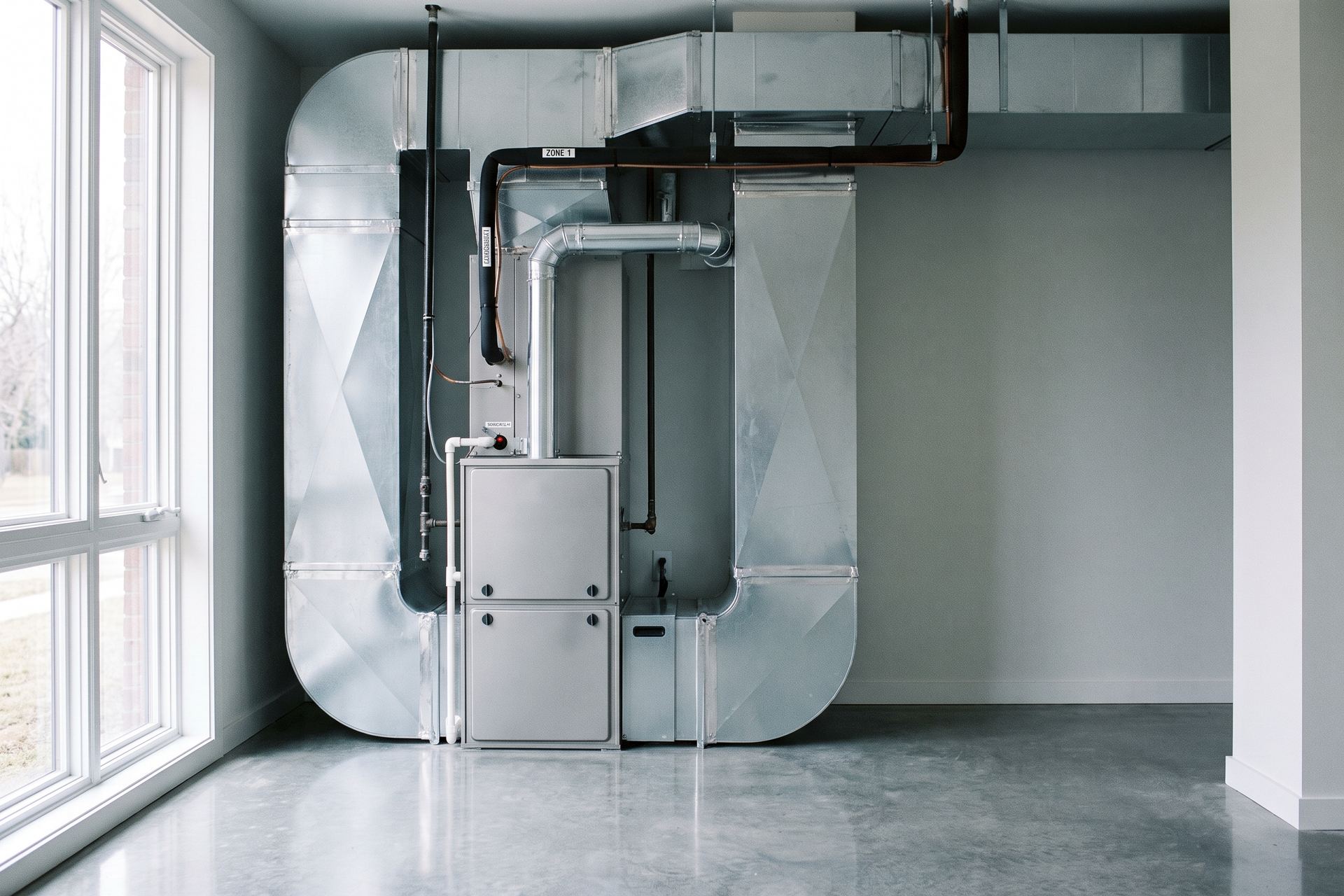
Start with what heats your home today
| Heats the house today | Worth pricing | Rebate that can apply | Check first |
|---|---|---|---|
| Gas furnace, with ducts | A new high-efficiency gas furnace (with air conditioning if you want cooling), or a heat pump that keeps the gas furnace as backup | NW Natural lists $800 from Energy Trust of Oregon for a 95% AFUE or better furnace, plus $200 with a Preferred Contractor, through January 31, 2027. Clark Public Utilities’ heat pump rebates don’t apply to gas-heated homes. | Venting: 80% and 90%-plus furnaces vent differently. If cooling is wanted, the coil and ducts have to suit it. |
| Electric furnace, with ducts | A central heat pump, which also cools | Clark Public Utilities: $1,000, or $1,250 for a variable-speed heat pump rated 7.5 HSPF2 or better. The installer must be in its Contractor Network; 777 HVAC was not listed on October 26, 2026. | Panel space and the circuit, and what the backup heat will be |
| An older heat pump | A new central variable-speed heat pump | Clark Public Utilities: $500, with the same installer rule | If it runs on R-22, new R-22 is no longer made, so a leak on it is the moment to price both options |
| Baseboards, wall heaters or ceiling cable heat | A ductless mini-split, single- or multi-zone | Clark Public Utilities: $900 for a ductless heat pump | How many zones the rooms really need; one indoor unit won’t keep several closed rooms even |
| An addition, ADU, shop or converted garage | A ductless mini-split for that space | Depends on how the main house is heated | Where the outdoor unit goes and how condensate drains |
The rebates are explained in full, with sources, in the Clark County rebate guide. The R-22 rule comes from the EPA.
How the three compare
- Central heat pump: heats and cools through the ducts from one system. On many systems a backup heat source takes over below about 35°F, as Clark Public Utilities explains; variable-speed models keep heating at lower temperatures. See heat pump installation.
- Gas furnace: heats only. Cooling needs an air conditioner or a heat pump on the same coil and ducts. A 90%-plus furnace vents through plastic pipe and needs a condensate drain. See furnace installation.
- Ductless mini-split: heats and cools without ducts, one indoor unit per zone. It suits homes with baseboards or wall heaters and spaces the main system never reached. See ductless mini-splits.
A heat pump can also be paired with a gas furnace, so the furnace covers the coldest hours and the heat pump does the rest of the year’s heating and the cooling.
Questions to settle before you choose
- Do you want cooling? If so, a heat pump or a ductless system gives it without a separate air conditioner.
- Is there room on the electrical panel? A new circuit, or sometimes a service upgrade, can change the price.
- What shape are the ducts in? Leaky or undersized ducts carry their problems into a new system.
- Which rebate is the quote counting on, and does that program need a listed installer?
- Who pulls the permit? Inside Vancouver city limits, replacing a furnace or air conditioner also means a duct leakage test before final approval (City of Vancouver).
Size comes last, from a load calculation rather than square footage. Clark County notes that sizing by square footage isn’t allowed under the Washington State Energy Code.
Where 777 HVAC fits
Alex, the owner of 777 HVAC, installs all three: central heat pumps (including a heat pump paired with a gas furnace), gas and electric furnaces, and single- and multi-zone ductless systems. Recent installs include Goodman heat pumps and a Daikin multi-zone system for a whole house. The estimate starts with a load calculation and prices the options that fit the house. Estimates on new systems are free.
Common questions
Is a heat pump or a furnace better in Vancouver, WA?
Neither wins for every house. A heat pump heats and cools from one system; a gas furnace heats only and needs an air conditioner or heat pump for cooling. What heats the house now usually decides it, because the rebates follow it: Clark Public Utilities pays heat pump rebates only to homes heated with electricity today.
Will a heat pump keep my house warm in winter?
A correctly sized heat pump with the right backup heat will. On many systems the backup takes over below about 35°F, and variable-speed models keep heating at lower temperatures. The quote should say what the backup is and when it runs.
Can I keep my gas furnace and add a heat pump?
Yes. 777 HVAC can pair a heat pump with a gas furnace, so the furnace covers the coldest hours and the heat pump handles the rest of the heating and the cooling.
What if my house has no ducts?
A ductless mini-split heats and cools without them, one indoor unit per zone. Homes heated with baseboards, wall heaters or ceiling cable heat can get $900 from Clark Public Utilities for a ductless heat pump.
How long does replacing a system take?
A straightforward furnace change-out is usually a single day. Jobs with ductwork, venting or electrical changes, or a switch to a different kind of system, can run to two days. You are told which before work starts.